After the Stump Is Ground: What to Do With the Chips and the Hole
A practical walk through the cleanup, from raking the chips to choosing seed, sod or a planting bed.
October 14, 2026 · 4 min read
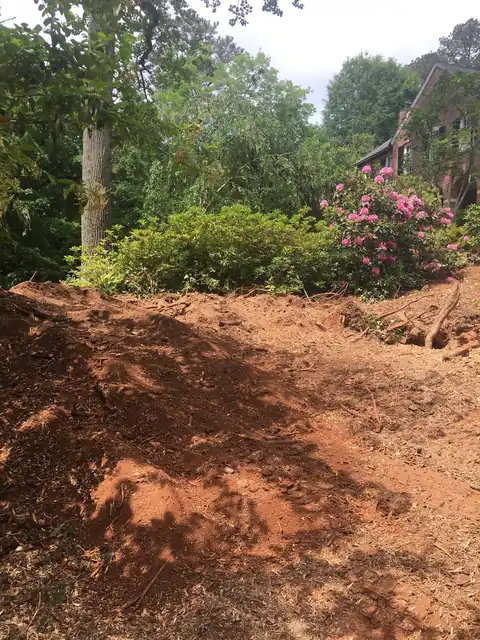
Once the grinder shuts off, you're left with a pile where the stump used to be. What you do next decides whether that spot turns into a smooth stretch of lawn or a lumpy reminder of the old tree. None of it is hard. Here's how the cleanup tends to go, and the choices you'll make about the chips and the hole.
What the grindings are
Grindings are the wood chips and sawdust the cutter wheel leaves behind. A ground stump produces more of them than most people expect, because solid wood turned loose takes up a lot more room than it did standing. That's why the finished spot often looks like a mound, not a hole.
Fresh chips are a mix of bark and wood. In the red clay around Atlanta they're often tinted rusty red from the soil churned in with them, as you can see in the photo above, which shows a finished mound of grindings beside a garden bed.
Don't be alarmed if the mound looks bigger than the stump did. Part of that is volume, and part is that grinding works below the surface, so the stump doesn't poke back up as the soil settles.
Three things you can do with the chips
- Reuse them as mulch: rake some into a layer around trees, shrubs and flower beds, or spread them over a garden path. Keep them a little way back from trunks and stems.
- Use some as fill: put a share back into the hole as a base layer, topped with real soil. Chips alone make a spongy, uneven surface.
- Haul them off: if you'd rather not see them at all, bag them or cart them away. Tell the crew ahead of time what you'd like, so there are no surprises on the day.
One caution from the trade: fresh wood chips can pull nitrogen out of the soil as they break down, and a thick layer of them under new grass seed doesn't do the seed any favors. If you're going to seed the spot, use mostly topsoil on top and keep the bulk of the chips for beds and paths.
Filling and shaping the hole
Rake the bulk of the chips out of the bowl first. Then fill with clean topsoil in layers, firming each layer with your boot or the back of a rake as you go. Leave the finished spot slightly mounded, because the soil settles and the chips that remain keep breaking down. A flat patch today can turn into a dip later.
If you see large pieces of root or chunks of wood in the hole, pull them out. Small pieces mixed in are fine, but a big chunk can rot and leave a soft spot in the middle of your new lawn.
Water matters more than people think. Whatever you put over the spot, keep the soil evenly moist while it settles and the new roots take hold. Soil that dries out and cracks around a fresh patch is how a good repair turns into a bare spot. If the area slopes, a light cover of straw over seed helps hold things in place when it rains.
Seed, sod or a planting bed
- Seed: a good match for small spots, but it needs steady moisture until the grass takes hold.
- Sod: gives you a green patch that blends into the surrounding lawn quickly. Keep it watered and keep foot traffic off it while it roots.
- Planting bed: a ground stump is a ready-made place for perennials or a planter. Work topsoil and compost into the spot before you plant.
- Another tree: if you want a replacement planted in or near the same spot, mention it before the grinding so the work can be planned around it.
Whichever you choose, the same rule applies: don't skip the topsoil. The grindings are a great raw material, but they aren't soil, and plants and grass root best in the real thing.
What a clean finish looks like
The cleanup is part of the job, not an extra. Customers of Tree Stump Masters say so on the company's own review page. Dave C writes: “On time, great work, great cleanup.” Troy D, who had several stumps taken out around his property, wrote: “They cleaned up everything perfectly afterwards as well.” Those are the kind of lines to look for in a reviewer's words before you hire anyone.
Before the job, tell the crew what you want left behind: chips piled where you can use them, chips raked flat, or chips carted off. If you have photos of the area, or a garden bed you're protecting, say so. A two-minute conversation up front saves a lot of raking later.
Got a stump you're ready to see gone? Tree Stump Masters offers free estimates. Call or text 770-378-4701, or call the office at 770-815-TREE, any day from 7am to 7pm.
Tree Stump Masters, 770-378-4701
Call 770-378-4701More articles
Stump Grinding vs. Stump Removal: What Each One Leaves in Your Yard
Two phrases that get used as if they mean the same thing, and the real difference between them once the machine goes quiet.
Why an Old Stump Is Worth Taking Out of Your Yard
An old stump looks harmless until you list what it does to the yard around it.