Stump Grinding vs. Stump Removal: What Each One Leaves in Your Yard
Two phrases that get used as if they mean the same thing, and the real difference between them once the machine goes quiet.
October 14, 2026 · 4 min read
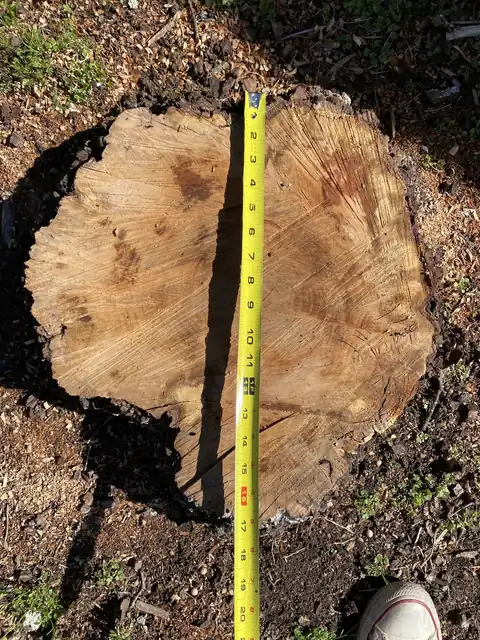
Call a few people about a stump and you'll hear two phrases used as if they mean the same thing: stump grinding and stump removal. They don't, quite. Tree Stump Masters handles both, and the honest answer to “which one do I need?” depends on what you plan to do with that patch of ground once the stump is gone. Here's what each approach actually leaves behind in your yard, so you can decide before anyone starts a machine.
What grinding does to a stump
A stump grinder is a machine with a spinning cutter wheel studded with hardened teeth. The operator lowers the wheel onto the stump and sweeps it back and forth, chewing the wood into chips a little at a time. When the job is finished, the stump is gone from the surface and from below it, and what's left is a heap of wood chips and sawdust sitting in a shallow bowl where the stump used to be.
The roots are a different story. Grinding takes out the stump and the thick flare of root right around it. The long roots that run out through the soil usually stay where they are, and over time they break down underground. For a lawn, a flower bed or most ordinary planting, that's perfectly fine. Once the hole is filled, you can mow and plant over the spot.
Grinding is the method most homeowners end up choosing because it's the least disruptive. The machine only works on the stump, so the lawn, fence, driveway and flower beds around it mostly stay as they were. Tree Stump Masters runs a tracked, remote-controlled grinder built for exactly that kind of careful work around a property.
One practical note: while the wheel is turning, chips throw out in front of the machine. Keep kids and pets indoors, and move toys, hoses and lawn furniture out of the work area ahead of time. It makes the job faster for the operator and the cleanup easier for you.
What full removal means
Stump removal in the strict sense means getting the whole stump out of the ground, root ball included. That usually involves digging, cutting roots free and hauling the stump away, and it leaves a large hole and a lot of displaced soil. It's the heavier, messier option, and it makes sense in a narrower set of cases.
When people ask about removal, what they usually want is simple: the stump gone, the yard looking right again, and the job done properly the first time. That's how Tree Stump Masters describes its own removal work, and for most yards the practical route to that result is grinding, then cleaning up and filling the hole.
Side by side
- Grinding: the stump is cut into chips and the surface is clear, while the long roots stay in the ground to break down.
- Full removal: the stump and root ball come out, which leaves a big hole to fill and more soil to move around.
- Grinding: a good fit for lawns, flower beds, tight side yards and any spot where heavy digging equipment would tear things up.
- Full removal: worth discussing when a spot has to be completely free of roots, such as under a new footing or where you want to plant another tree in the very same place.
Which one fits your yard
Start with what the spot is for. If you want grass back, a garden bed, a place for a bench, or simply to stop tripping over a stump, grinding covers it. If you plan to pour concrete or build something heavy right where the stump sits, say so before any cutting begins so you and the crew can talk through the options.
Tell the crew about anything buried nearby, too. Irrigation lines, cable runs and gas lines don't announce themselves from the surface. Getting utilities marked before any grinding or digging is simple good sense, and another article on this blog covers planning stump work after a tree comes down.
The roots that get left behind
A common worry is that leftover roots will cause trouble. Mostly they just sit and decay. The exception is trees that like to send up sprouts from their roots and stump, which is why Tree Stump Masters lists new tree growth among its reasons to deal with a stump instead of leaving it. Taking the stump out removes the main source of those shoots, and if you spot a few later, they're easy to cut back.
If you've got a stump that's hollow, crumbly or half-rotted, grinding is usually even more straightforward, since there's less solid wood for the cutter wheel to work through. If it's a big, sound hardwood stump with roots spreading in every direction, grinding still works, it just takes the machine more passes.
Not sure which approach your yard needs? Describe the stump, where it sits and how you want the spot to look. Tree Stump Masters gives free estimates, and you can call or text 770-378-4701 any day of the week between 7am and 7pm.
Tree Stump Masters, 770-378-4701
Call 770-378-4701More articles
Why an Old Stump Is Worth Taking Out of Your Yard
An old stump looks harmless until you list what it does to the yard around it.
After the Stump Is Ground: What to Do With the Chips and the Hole
A practical walk through the cleanup, from raking the chips to choosing seed, sod or a planting bed.